
- News
- City News
- gurgaon News
- Pass confusion causes Gurugram border protests
Trending
This story is from May 21, 2020
Pass confusion causes Gurugram border protests
The pass system for the Gurugram -Delhi travel and its accompanying set of regulations once again drew questions on Wednesday as a violent protest erupted in a border village,
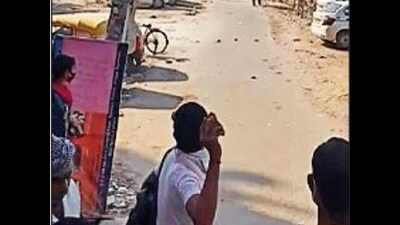
Clashes erupted as people were stopped from joining work

While the exasperated villagers said they should be let in because they are carrying official movement passes and cannot afford to lose the day’s wages any longer, police claimed they were following government orders and could not let them in. Some of the protesters alleged cops at the border enforced the rule arbitrary, and that some of them had entered Gurugram using the same pass on earlier occasions.
“They stop some of workers and let some go. I stopped going to work around two days back due to daily harassment by the police,” said Komal, who lives in Kapashera and works in Udyog Vihar.
This confusion over movement passes continues in Gurugram because of the shifting rules protocols have left many confused. Passes have been issued in three batches, each with its own rules – first, for essential services movement within Gurugram , then inter-state e-passes after the government gave an undertaking in the Delhi high court that it would facilitate cross-border movement of workers involved in essential services, and third, passes for industrial workers that factory owners can now apply for.
Additional chief secretary and Gurugram Metropolitan Development Authority chief VS Kundu clarified there are only two kinds of inter-state passes are being issued currently — one for essential workers with permission for multiple entry and exit, and the other a one-time permit for anyone else who works in the city and lives outside it. Those with the latter can enter the city once but have to stay back. They are not allowed to travel between Gurugram and Delhi.
As a result, there are many who have inter-state passes but are confused about the fine print. Some still have the intra-city passes, which were issued as permits to travel within the city during the lockdown and are currently invalid, but continue to produce those at the border. “The passes workers are producing aren’t valid anymore. They need to apply afresh for passes for cross-border movement. However, unless they are engaged in essential services, the pass will not allow multiple entries and exits. Once they cross the border, they will have to stay on the premises itself,” said Kundu.
This, however, is not conducive for industries. “While the government has allowed industries to function with 100% strength, it is not feasible because many workers come from Delhi. The government wants us to them up in the premises, but hardly any industrial units have the space to make that arrangement,” said Praveen Yadav of Gurugram Udyog Association. Thus, though the government has tried to fire up the industries with a slew of relaxations, effectively, the revival continues to be slow because of the border restrictions, he added.
Asked about allegations of workers that the imposition of the rule at the borders is arbitrary, a policeman posted at the border admitted that with multiple directions and rules coming in, there is some confusion, even among cops. “The information trickles down slowly, and sometimes, by the time it reaches those implementing the orders, the rules have changed again,” said the policeman, who requested not to be named.
End of Article
FOLLOW US ON SOCIAL MEDIA






Hot Picks
TOP TRENDING
Trending Stories
In City
Entire Website
- 'We were treated like slaves, made to work for 15 hours a day': Tricked into Ukraine war, 3 from Karnataka return home
- 'My father was on the flight': Jaishankar opens up about 1984 Air India hijack
- Airtel CEO Gopal Vittal sends letter to Reliance Jio, Vodafone-Idea, Tata Tele and BSNL CEOs; here's what he said
- Prince Harry to celebrate 40th birthday away from Meghan Markle
- Haitian immigrant pet-eating row: Ohio woman accused of eating cat is US citizen, video is not from Springfield
- Kejriwal out of jail; 'CBI arrest only to frustrate ED case bail': SC judge
- Donald Trump reveals what Laura Loomer is to his campaign: 'I don't control her'
- Hamster Kombat Daily Cipher Codes and Combo Cards for September 14, 2024: Unlock up to 1 million coins
- Laura Loomer's photo with Donald Trump viral. People ask where's Melania, where's wedding ring
- Garena Free Fire MAX redeem codes for September 13: Win in-game goodies and rewards
- Opposition offered to back me as prime minister, I refused: Nitin Gadkari
- CCTV footage at Nagpur bar deleted to shield BJP minister son?
- The new ‘green revolution’ will not feed India
- Encounter breaks out between security forces, terrorists in J&k's Poonch
- 'Tu suicide kar le': Paralympics champion Navdeep
- TN doctor held for morphing photos, videos of MBBS woman classmate
- Don’t rethink pink. Plane truth is we need women-friendly seats
- Bengaluru woman sparks controversy with comments about Swiggy delivery executive
- I feel ready to take up the challenge: India bowling coach Morne Morkel
- BJP MLA held over casteist abuse, bribery charges in Karnataka

Popular Categories
Hot on the Web
Top Trends
Trending Topics
World Largest HorseEID WishesGreen Apple BenefitsPriyanka Chopra TattooKottukkaali OTT ReleaseNarendra ModiGhaziabad Juice SellerHair LossSudha MurtyMalayalam ProducersIndia's Best Dancer 4Simi GarewalDilli BabuIndian National ParksLaung BenefitsVikas SethiApple iPhone 16Donald TrumpAadhar Card UpdateWordle Answer
Living and entertainment
Latest News
New season begins with renewed hope for BlastersPremier League: Erling Haaland hits another two in Man City's come from behind win over BrentfordMeerut building collapse: 3 dead; rescue operations continueDon’t rethink pink. Plane truth is we need women-friendly seatsWWE NXT Star Reunites With Father At TNA Victory RoadKashmir will soon get a government, but those blinkers are going to stay‘There is no affordable transport currently, the biggest problem in Goa is taxis’IIM Jammu hosts 'Fostering Academia and Industry Partnerships' event at BengalaruMP Bharat, TDP Andhra President Srinivas promise action to safeguard protection of steel plant workersLiverpool slump to shock 1-0 home defeat by Nottingham ForestActivists complain as showroom burns old papers; NMMC penalizes Rs 250 onlyVinith Venkatesh scores in ISL debut as Bengaluru FC edge past East BengalJitendra Jorwal takes charge as new Ludhiana deputy commissioner, vows seamless delivery of services'Hindi must be made acceptable, not imposed'37 year old beats fatty liver condition with unbelievable weight lossCong holds protests on second anniversary of MLA defectionsCouncillor's bro, 4 others held for hurling stones at Vande BharatCancer, Weekly Horoscope, September 15 to September 21, 2024: Encounter a busy week filled with unexpected challenges
Copyright © 2024 Bennett, Coleman & Co. Ltd. All rights reserved. For reprint rights: Times Syndication Service